- Details
- Peter Eerdmans
- Weekly highlights

Yellow-legged Gull – Martin Casemore
The most noteworthy sighting of the week was a very unseasonal Jack Snipe seen at Worth Marsh on the 12th. There are very few July records of this species in Kent, less than a handful. Difficult to judge if it never left this Spring or is a failed breeder that decided to return early.
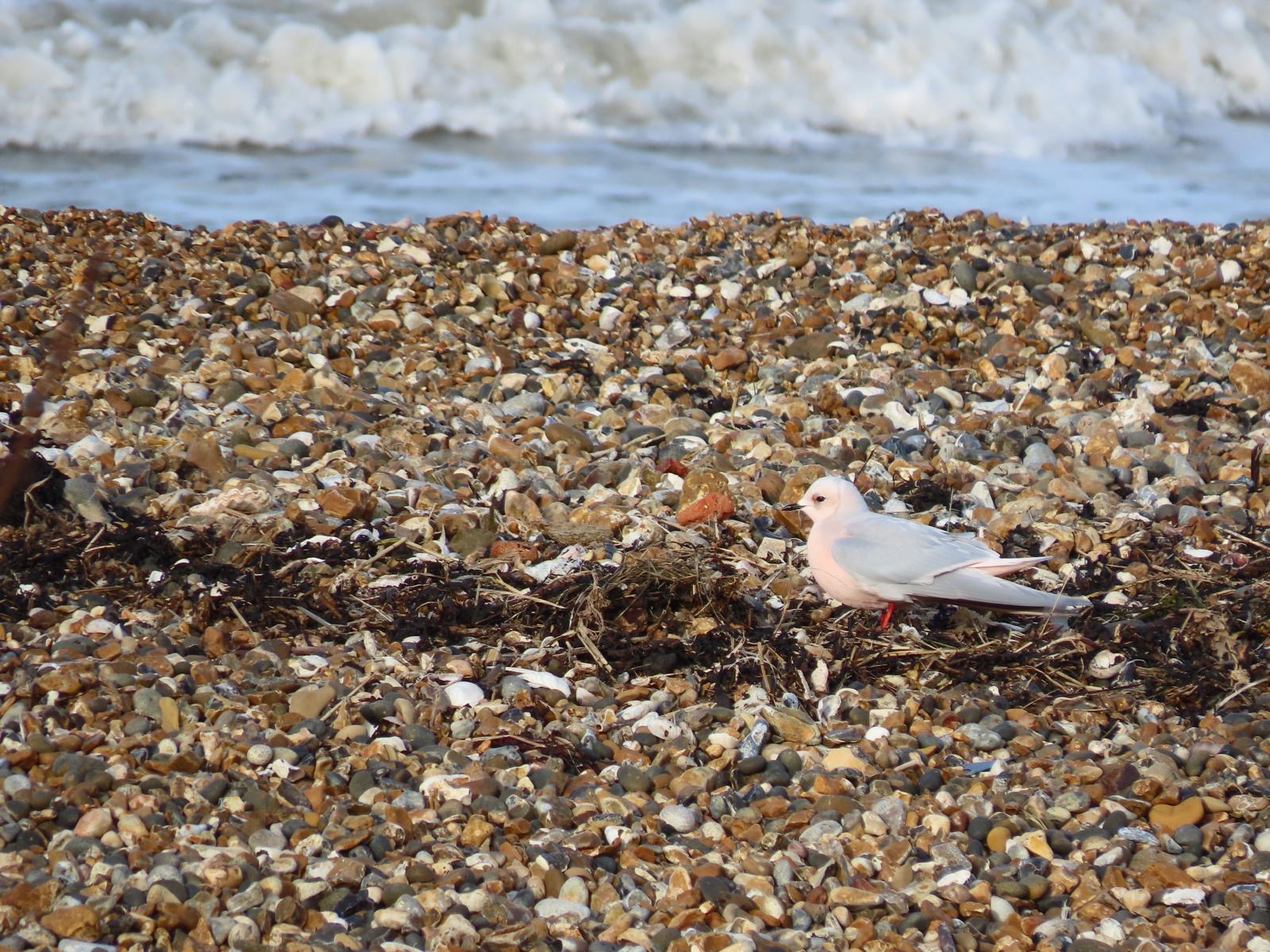
The Bonaparte’s Gull remained at Oare Marshes, where there also was a Spoonbill later in the week. It is still quiet in terms of returning waders, with just a few Spotted Redshanks and Wood Sandpipers recorded in Kent this week.
- Details
- Peter Eerdmans
- Weekly highlights
Caspian Tern – Martin Casemore
One of the regular North Foreland watchers kept the incredible year so far for that broader area going with an adult Laughing Gull flying past on the 6th. If accepted, it will only be the 10th for Kent and the first since the 2016 Dungeness bird. Unfortunately, it was not seen by anyone else. The other rare gull in Kent (the Bonaparte’s) was more cooperative and was on show at Oare throughout the week.
The fourth Caspian Tern of the year (although likely involving the same individual on at least some occasions) was found on the evening of the 4th roosting on the beach of Greatstone-on-Sea.
- Details
- Peter Eerdmans
- Weekly highlights

Zitting Cisticola – Peter Eerdmans
Another mega was recorded in Kent this week!! A Zitting Cisticola was found at Foreness Point on the evening of the 2nd, only meters away from where the Black-headed Bunting was seen earlier in the Spring. It was mobile, but sang and showed regularly, including in display flight. It was seen until 21.10 and fortunately it was still there for the early risers the next morning as it continued to perform from 5am in the suitable habitat of scrubs and grass. However, at 6.10am it flew high inland. This is only the 6th record for Kent with less than 10 seen in the UK.
Other exciting news over the week was the return of the Bonaparte’s Gull at Oare Marshes on the 2nd for its 13th consecutive Summer!
- Details
- Peter Eerdmans
- Weekly highlights

Ruddy Shelduck – Peter Eerdmans
A relatively quiet week, with the best bird being a Rosy Starling that was seen briefly in a private garden in Burmarsh on the 23rd. Another nice bird was a singing Serin on the morning of the 22nd at St Margaret’s at Cliffe. European Bee-eaters were seen or heard flying over Kingsdown on the 19th and on the 20th over Aycliffe.
Several White Storks toured the county, with the largest group a group of six over Betteshanger near Sandwich Bay. Wood Sandpipers have started to return with sightings at Oare, Worth, Dungeness and Bough Beech.
- Details
- Peter Eerdmans
- Weekly highlights

Hobby - Terry Laws
As the weather warmed up, the birding got expectedly a bit quieter. An immature Golden Oriole was seen and heard at Reculver on the 17th. As so often with this attractive species it only stayed around briefly. It has been a good spring for Black Kites, with another flying into the county at Dover on the 17th, while about the 10th Bee-eater of the Spring flew over Kingsdown on the 19th.
Intriguingly, two Cranes were seen again, this time circling over Haysden CP on the 14th
- Details
- Peter Eerdmans
- Weekly highlights

Rose-coloured Starling – Martin Casemore
Another week and another very rare bird in Kent. A Western Orphean Warbler was found on the 11th near Cliffe singing and showing well. It was found during a survey on private land and access for more birders was unfortunately not granted. If accepted this would be the first record for Kent! Another good record was a beautiful adult Rose-coloured Starling that performed well at Dungeness near the Observatory also on the 11th.
The south-westerly winds provided some sea-watching opportunities, with two Balearic Shearwaters past Dungeness the best of the bunch. This however wasn’t a new bird for the Kent year list as we had a very unseasonal sighting in January already. Good numbers of Manx Shearwater (with 27 past Dungeness on the 7th) and Arctic Skua were also seen.
- Details
- Peter Eerdmans
- Weekly highlights
White-tailed Eagle – Terry Laws
An Icterine Warbler found singing at North Foreland on the morning of the 30th was the best bird of the week. Unfortunately only a portion of the local birders connected with the bird as it could not be refound later in the morning.
Further highlights included more of the species we have been enjoying over the past few weeks with a Black Kite flying over Seasalter and later Elmley on the 1st, a pair of Red-footed Falcons at Stodmarsh on the 30th and a Bee-eater over Thanet on the 1st. A White-tailed Eagle from the Isle of Wight reintroduction program was at Elmley on the 3rd and 4th. Continuing with the raptor theme, several Honey Buzzards entered the county, mostly over Dover, but singles were also seen at Hope Point and Seasalter. At Oare there were four Curlew Sandpipers on the morning of the 3rd. A Quail, the first recorded for the year, was flushed from a garden near Sandwich Bay on the 31st, while a Ruddy Shelduck was seen at Cliffe on the 4th.
- Details
- Peter Eerdmans
- Weekly highlights

Eastern Bonelli’s Warbler – James Dee
Last week’s mega was topped by another this week, an Eastern Bonelli’s Warbler was found in the trapping area near the Dungeness Bird Observatory! The first confirmed record for Kent no less, and only the 9th for the whole of the UK. Many birders descended on the area during its one day stay. While it had shown well to the initial finder, as the winds picked up, it became increasingly hard to see during the day, with many of those present struggling to get ‘tick-able views’. It did sing almost constantly though and also called its diagnostic ‘chip’ on occasion.
The Dungeness area also enjoyed a Bee-eater which finally showed well on the morning of the 23rd. As the female Red-footed falcon disappeared from Stodmarsh, one turned up at Dungeness and was seen hawking with the local Hobbies for most of the week. Stodmarsh didn’t have to do without one long, as a second calendar year male Red-footed Falcon showed up on the 26th.
- Details
- Peter Eerdmans
- Weekly highlights

Black-headed Bunting - Kenton Evans
The rarest bird of the Spring, so far, was found in the early morning of the 18th at Foreness, a stunning male Black-Headed Bunting. This is only the 7th record for Kent and the first since 1997! Unfortunately, it was only present briefly before it flew of in an easterly direction. It seemed to land but could not be refound by the (few) birders that tried during the rest of the day.
Langdon Cliff had a purple-patch day on the 16th when a beautiful male Red-backed Shrike was discovered at Fox Hill Down. It could be elusive but showed on and off very well throughout the day. Some birders looking for it were rewarded with a fly-over female Red-footed Falcon, while later in the day a Black Kite flew in off the sea.

Red-backed Shrike – Jamie Partridge
Further highlights include a Montague’s Harrier (ringtail) that was seen at Dungeness in the morning of the 19th and two Common Cranes that crossed the county on the 20th (seen at Hamstreet and Littlestone). A Black-crowned Night-heron was heard and confirmed by a sound-recording at Dungeness around 10pm on the 20th.
- Details
- Peter Eerdmans
- Weekly highlights
Whiskered Tern – Martin Casemore
The dry, sunny weather with easterly winds persisted. It seems to result in fewer commoner migrants stopping over in Kent (e.g. we have had very few flycatchers or Whinchats this spring), but the good run of rare birds continued. Two species that require a BBRC description for formal adoption were discovered: on the 11th a male Kentish Plover spent the morning at Pegwell Bay (a report on the 13th is thought to be erroneous), while on the 13th a mobile Whiskered Tern visited pretty much every lake and gravel pit around Dungeness RSPB, giving the locals a run-around. It was seen till about 19.30 in the evening. A nice summer-plumaged adult, this was the 19th record for Kent. The same, or a second bird, was seen the next day at Worth for a few minutes.
There were plenty of other good birds around. The first ‘KOS day at Dunge’ on the 10th coincided with four skua species being recorded past the sea-watching hide. Particularly a Spring record of Long-tailed Skua is very good. A Bee-eater and White Stork were also seen flying over in the area that day.
Kent Ornithological Society