 Kent Ornithological Society
- Details
- Peter Eerdmans
- Weekly highlights
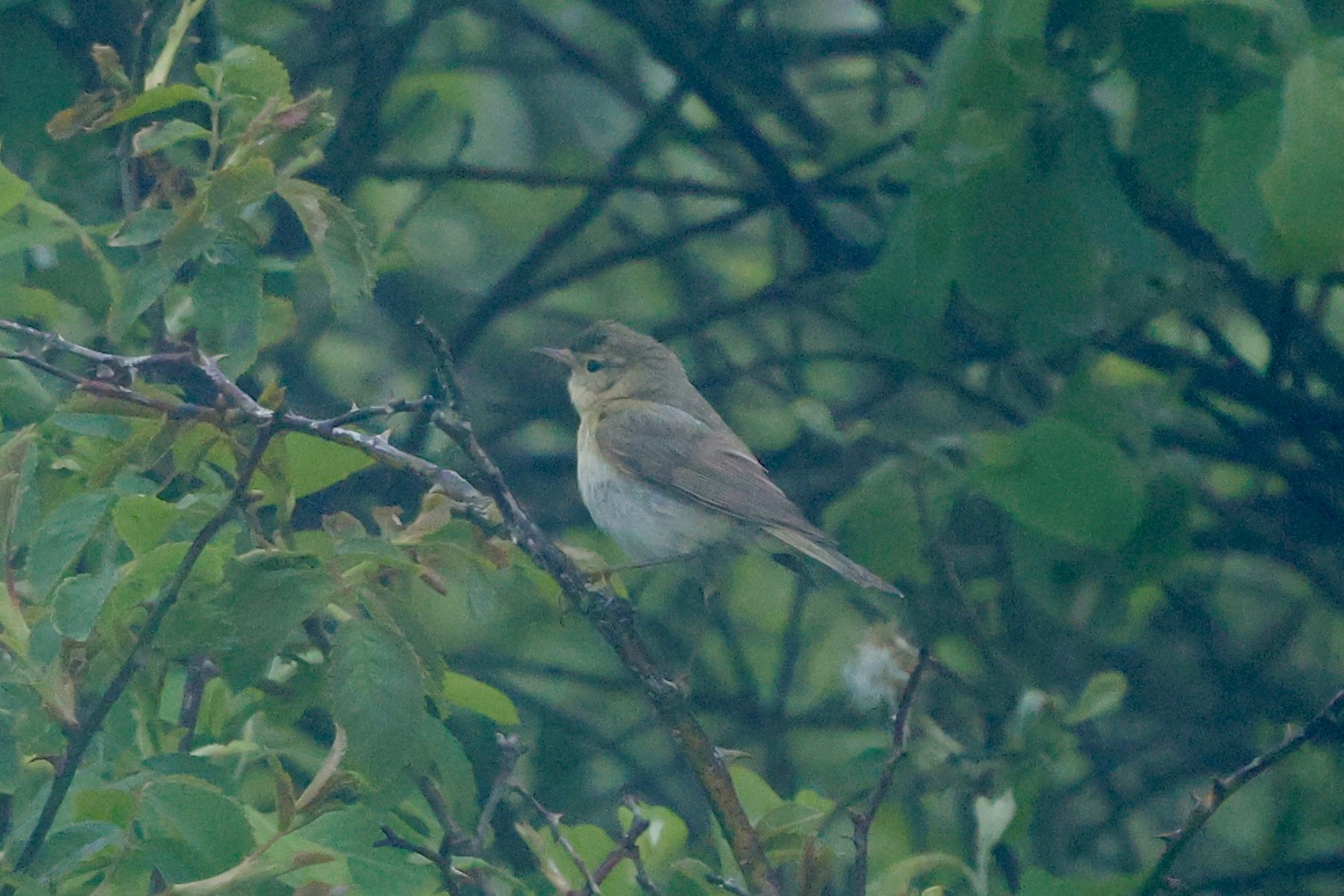 Iberian Chiffchaff - Peter Eerdmans
As to be expected in early May, it was a busy week in terms of scarce birds! The best bird of the week was an Iberian Chiffchaff found singing in the trapping area at Dungeness in the early morning of the 4th. It settled at the top of Long Pits where it sang all day and showed well occasionally. This is only the 7th record for Kent. Another very good find was a Gull-billed Tern, seen and photographed by a single observer past North Foreland on the 30th. Several Red-footed Falcon were seen during the week, a 1st summer female was on show at Stodmarsh on the 1st, one flew over North foreland on the 2nd, while a female was at Worth from the 3rd. Temminck's Stints were at Dungeness (on the 2nd and 3rd) and at Worth Marshes on the 2nd. An European Bee-eater flew over Pegwell Bay on the 2nd, while a Black-crowned Night Heron was sound recorded during the middle of the night over Bishopstone Glen. A Hoopoe spent a couple of days in an, unfortunately, undisclosed site near Rochester. A single Glossy Ibis was at Dungeness on the 2nd, while seven flew over the ARC on the 7th.
- Details
- Peter Eerdmans
- Weekly highlights
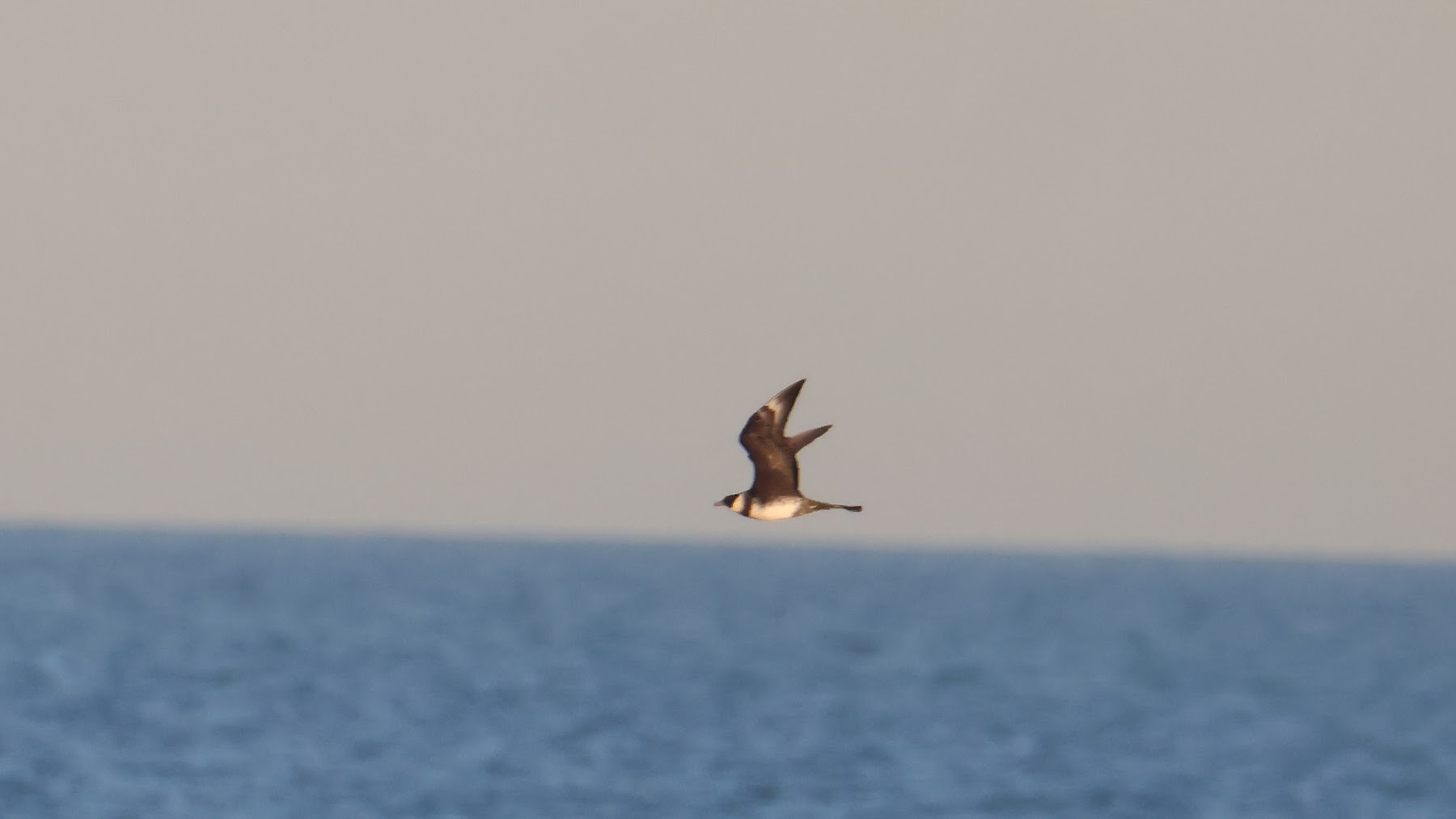 Pomarine Skua - Martin Casemore
Sea-watching took centre stage this week as 'Pom season' at Dungeness fully started. Over the week, more than 65 Pomarine Skuas were counted past the sea-watching hide. There were also good numbers of Black-throated Diver, Great Skua, Black and Little Tern, but the highlight of the week were 1467 Little Gulls counted on the 25th. This constitutes a new day record for Dungeness surpassing the previous total by more than 300. Sea-watching outside of Dungeness was a lot more modest, but a Red-necked Grebe was seen around the east coast, while a handful of Black-throated Divers and Pomarine Skuas were seen as well.
There were two typical spring 'overshoot' migrants this week. A female Red-footed Falcon spend an hour or so at Reculver before flying off high, while a Hoopoe was seen briefly at the northern end of the golf course at Littlestone-on-Sea.
- Details
- Peter Eerdmans
- Weekly highlights
If you are enjoying the Weekly Highlights, why not join the KOS AGM on Wednesday 29 April at 7.30pm, after which I will present the Kent birding highlights of 2025. I will give an update on the scarcer breeding birds, give a comparison of two sea-watching hotspots, and of course cover all the rare and scarce birds, such as Booted Eagle, two Bonelli's Warblers and Zitting Cisticola. See below for Zoom-link and AGM agenda.
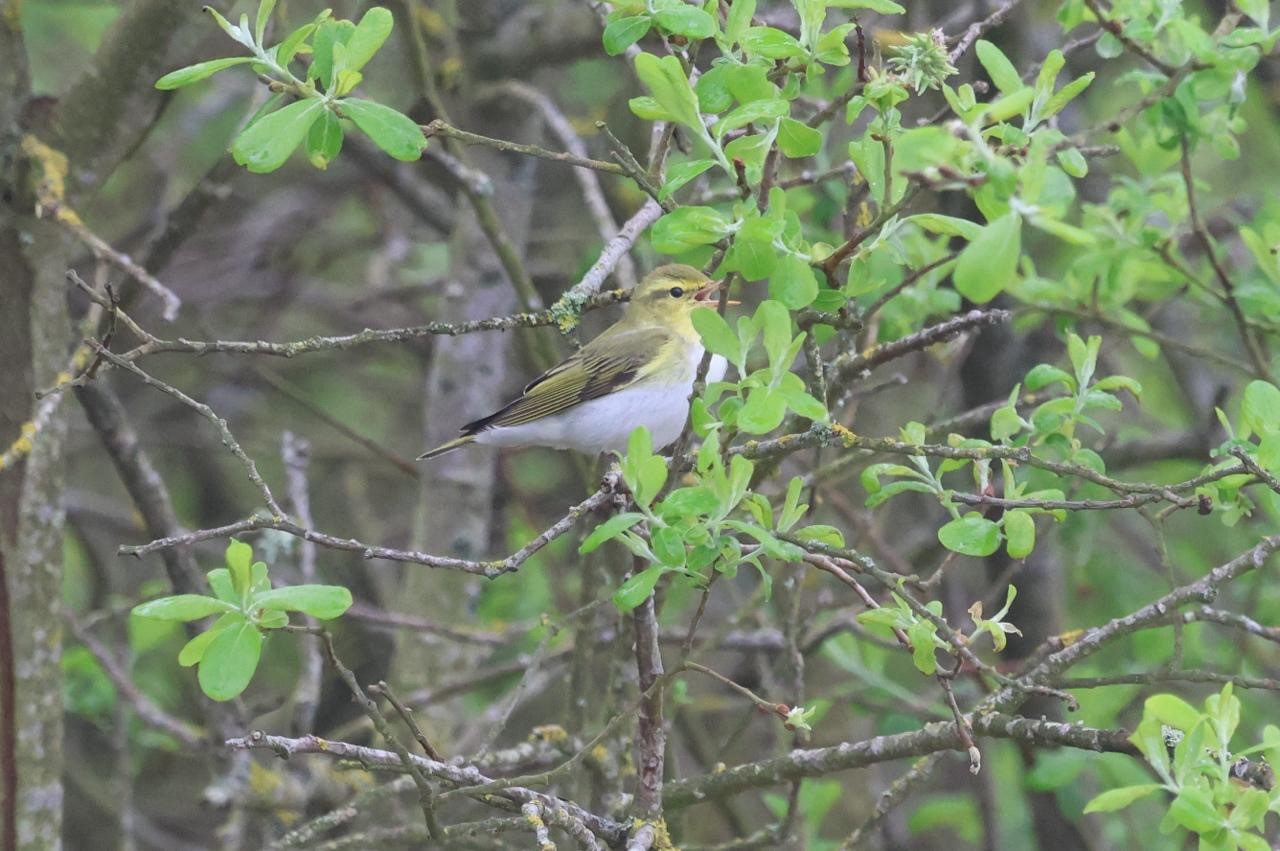 Wood Warbler - James Dee
The 18th offered great conditions for a 'fall' of migrant song birds. Most coastal areas enjoyed good numbers of Willow Warblers, Blackcaps and Greater and Lesser Whitethroats, but Dungeness stood out with 110 Willow Warblers counted, two Common Redstarts, a Pied Flycatcher and, the stand-out bird, a Wood Warbler which could be seen and heard singing for most of the day around the Long Pits. A second Wood Warbler was singing in Denge Wood on the 23rd. With only two reports last year, this is not an easy bird to connect with in Kent. Another surprise followed the next day at Dungeness when a Yellow-browed Warbler was sound-recorded on the 19th, a rare bird in Spring in Kent.
A video of a Black Stork flying over a birder's garden in Badlesmere on the 22nd surfaced on Facebook; a very good record as this is not an annual bird in Kent and there has never been one this early in the year. Another first for the year was a Purple Heron at Stodmarsh on the evening of the 20th.
- Details
- Peter Eerdmans
- Weekly highlights
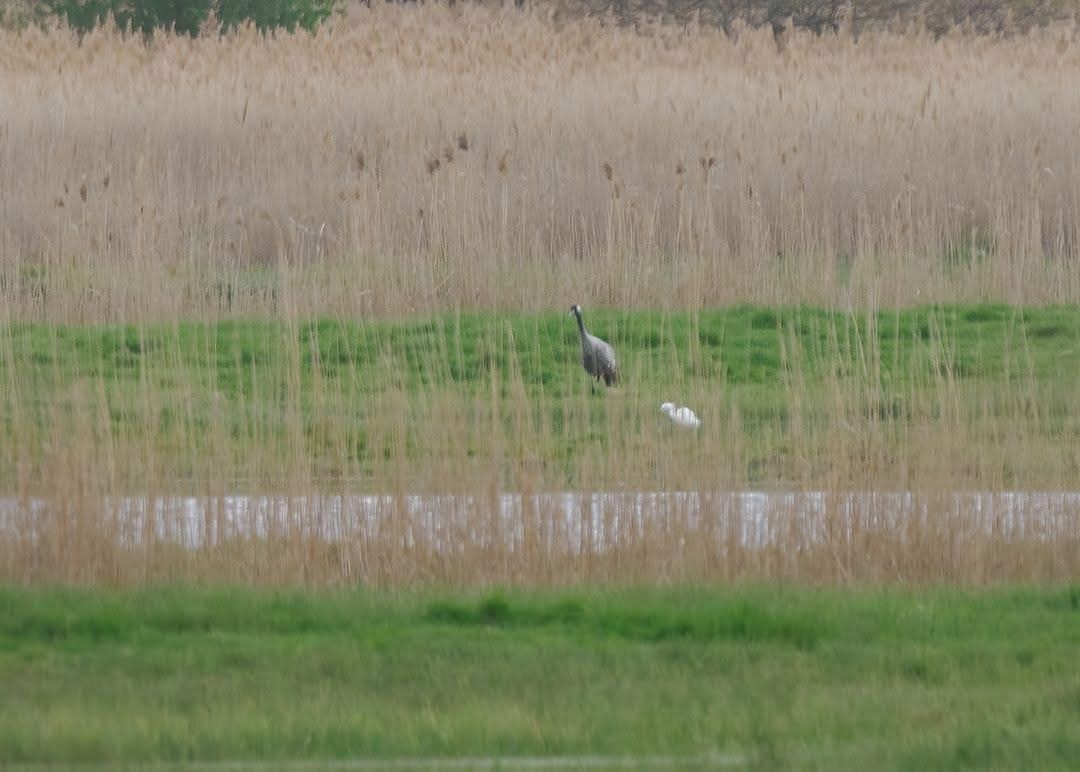 Common Crane - Mark Chidwick
Another Bluethroat was found this week, this time a female a bit further north along the coast at Foreness Point on the evening of the 13th. Unfortunately it couldn't be refound after its initial discovery. A Common Crane lingered at Seaslater, providing distant views.
Other than that it was a relatively quiet week. Arctic Tern (on the 15th at Dungeness), Little Tern (13th at Reculver), Swift (12th at Stodmarsh), Grasshopper Warbler (16th at Westbere) and a Pied Flyctacher (11th at Margate) made their first appearances. A couple of White Stork roamed the county, while Ring Ouzels were seen at Foreness Point, Elmley, Cliffe, Boxley, Sandwich Bay and Herne Bay. Two Wood Sandpiper remained at Worth Marshes.
- Details
- Peter Eerdmans
- Weekly highlights
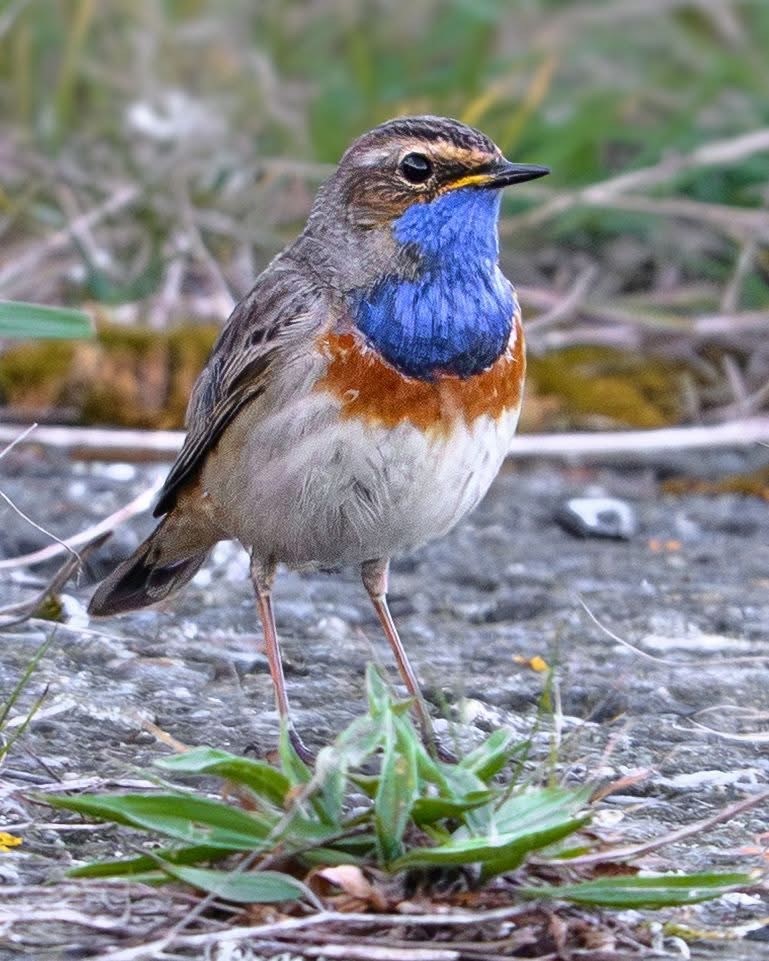 Bluethroat - Josh Tompsett
The best bird of the week was a lovely male White-spotted Bluethroat at Langdon Cliffs on the 8th. Seen by two birders in the morning it was very elusive, but finally showed in the evening allowing a few photos to be taken. Another good bird could not be totally confirmed, a probably Alpine Swift was seen briefly over Great Wood, Worth Marsh on the 9th. There were further interesting migrants seen, but all were flyovers and didn't linger, such as a Serin over Foreness on the 6th and a Black Kite over Grove Ferry on the 8th and Seasalter on the 9th. An Iceland Gull was at Coldharbour before flying west. A Glossy Ibis was at Bluebell Farm, Worth Marsh, while a White-tailed Eagle flew over Aycliffe. A few Ring Ouzel were seen, with one trapped and ringed at Dungeness on the 7th. Common Cranes continued to be seen with one at Seasalter on the 9th and a pair at Stodmarsh on the 8th which were seen mating before flying off the next morning. A few Ospreys were seen, with one lingering off Motney Hill. A Hooded Crow, a subspecies these days, was in a ploughed field at Langdon Cliffs early in the week.
- Details
- Peter Eerdmans
- Weekly highlights
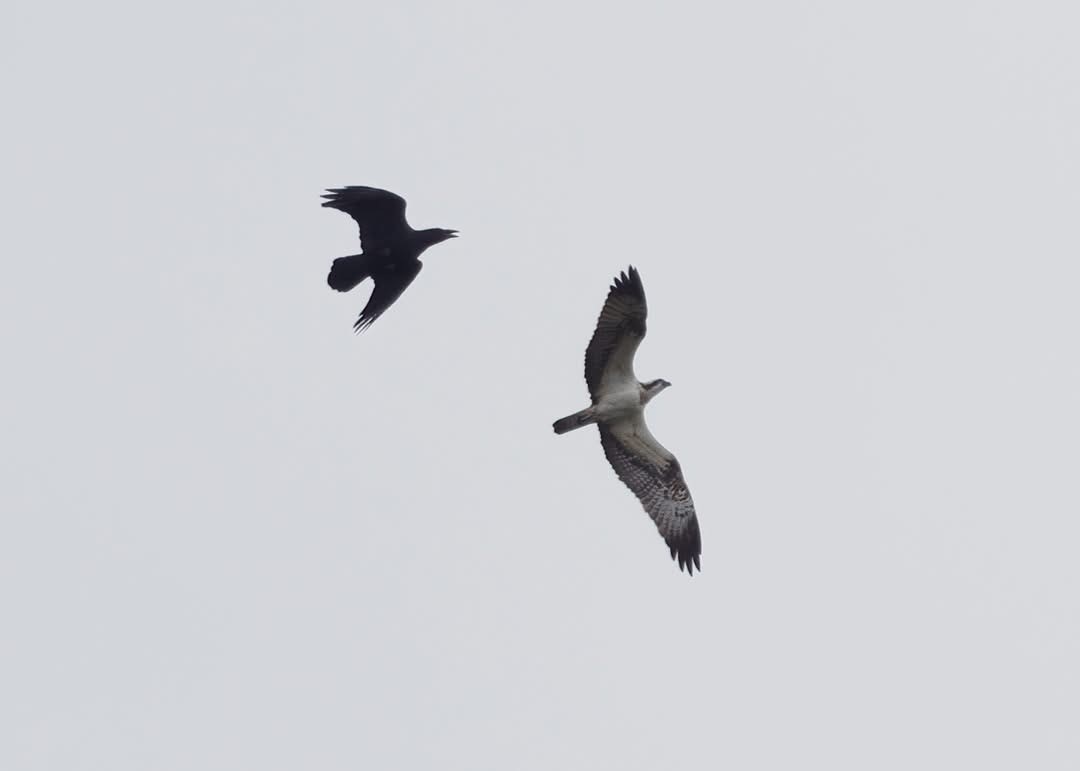 Osprey with Raven - Mark Chidwick
Two White-tailed Eagles flew over Bough Beech together on the 30th. After consulting the Roy Dennis Foundation they indicated that one was a female from the Isle of Wight introduction program born in 2021, but that the other was likely a true vragrant from the continent! Another intriguing rapter was a possible Pallid (or Montague's) Harrier high over Dungeness on the 27th. There also were a handful of Osprey crossing the county, with two past Bough Beech this week.
A male Ring Ouzel at Worth Marshes on the 30th was the first of the year. It was followed by another at Dungeness on 1 April. Willow Warblers arrived back, with the first on the 27th. Over 20 Wheatears on the beach at Dungeness was a nice arrival on the 26th, but other than that Spring migrants were quite sparse this week.
A Crane flew over Dungeness on the 26th, as did two Short-eared Owls on the 2nd. A White Stork was seen over Faversham on the 29th. Five Black-necked Grebes were on the ARC, Dungeness, from the 31st. The Red-flanked Bluetail was not reported this week, while the possible Central Asian Lesser Whitethroat that wintered in a garden in Lydd, turned out to be a normal Lesser Whitethroat following DNA analysis. A juvenile White-fronted Goose remained in the Otford area.
- Details
- Peter Eerdmans
- Weekly highlights
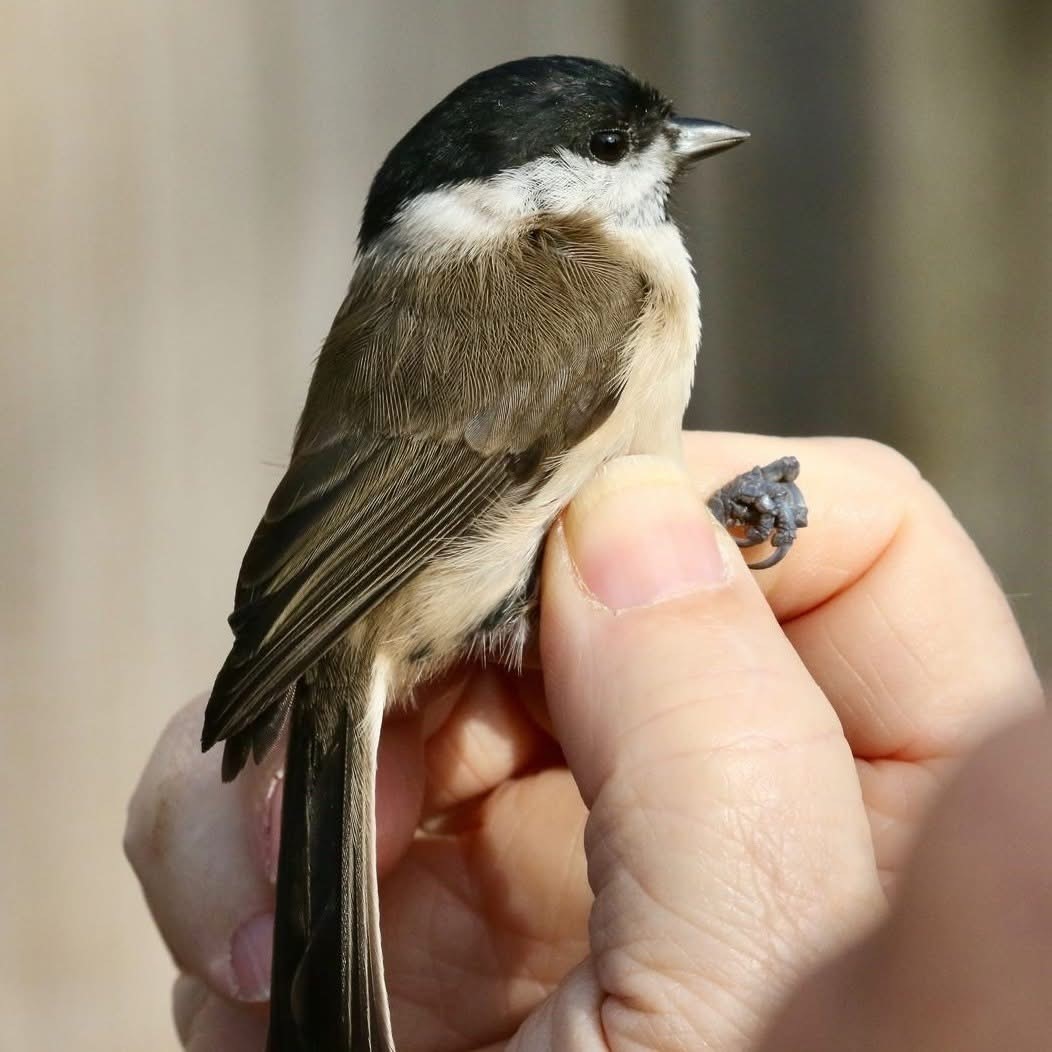 Marsh Tit - Andrew Lipczynski
The Red-flanked Bluetail at Crockham Hill was seen regularly this week, but the Pallas's Warbler was not reported. A single Shore Lark was again reported from Cliffe on the 21st. Another Black Kite, possibly the same bird as last week, was reported, this time over Tenderden on the 20th. But perhaps the rarest sighting was a Marsh Tit caught and ringed at Sandwich Bay, the first in the area for 30 years.
The Red-necked Grebe remained on view at Tankerton all week, with Great Northern Diver, Black-throated Diver and several Merganser also present on some days. A Little Stint was at Worth Marshes on the 25th, while the Iceland Gull was again seen there on Minnis Flood on the 20th and 22nd. One Greater Scaup remained on Alpha Pool, Cliffe, but the Ruddy Duck was not reported this week. Black-necked Grebes were on ARC (2) and Lade Pits in the Dungeness area.There were good numbers of White Wagtail and Black Redstarts seen.
- Details
- Peter Eerdmans
- Weekly highlights
 Pintails - Martin Casemore
A nice varied week in Kent birding. Sea-watching picked up, with particularly Dungeness having a good day on the 17th. Good numbers of Pintail (308) and Brent Goose (2708) were seen, but the best were a female Smew (rare in the county these days and even rarer on sea-watches) and a Long-tailed Duck. A Black-throated Diver in full summer plumage was also a nice sighting that day. A group of 7 Black-necked Grebe drifting past the sea-watch hide on the 15th was another highlight this week. The north coast was a bit quieter with the main sightings a Great Northern Diver at North Foreland on the 15th and a Red-necked Grebe at Swalecliffe/Tankerton on the 18th and 19th.
- Details
- Peter Eerdmans
- Weekly highlights
 Little Bunting drawing - John Carnell
The best bird of the week was a Little Bunting that was seen by one of the locals at North Foreland for a few minutes in the early morning of the 12th. There have been less than 20 records of this species before in the county. A pair of Gargeney at Oare Marshes on the 10th were the first of the year, which is exactly on the typcial date over recent years. The first Osrpey of the season flew over Bough Beech on the 11th, a couple of weeks earlier than normal. The (Kumlien's) Iceland Gull was discovered on Worth Marshes this week, showing well for a couple of hours on the 7th before once again flying off. One wonders were it will next show up. The long stayers, the American Wigeon at Scotney, Red-flanked Bluetail at Crockham Hill, Pallas's Warbler at Faversham Creek and the Ruddy Duck at Cliffe were all seen again on most days this week. Cliffe also continued to host two Scaup as well as a Spotted Redshank.
- Details
- Peter Eerdmans
- Weekly highlights
 Kumlien's Iceland Gull - Jamie Partridge
The highlight of the week was an Iceland Gull at South Foreland on the 3rd as it came off the roost with other gulls as the tide came in. Interestingly it seemed to be the same bird that was photographed on the north Coast a few weeks ago. More detailed photos seem to confirm its identification as a Kumlien's Iceland Gull, but it is difficult to be entirely sure in this plumage. For a great discussion on its ID see perdixbirding.com. Further highlights were an unseasonal Black Kite that was seen over Wye on the 28th, and a Serin at Pegwell on the 3rd. Unfortunately none of these stuck around.
Other than that there were the first signs of Spring with the arrival of the first Sand Martins at Dungeness on the 28th and the first White Wagtail at Cliftonville on the 3rd. There was also a marked increase in singing Chiffchaffs, which included a Siberian Chiffchaff at Stodmarsh on the 3rd. A nice surprise was the reappearance of the American Wigeon at Scotney on the 5th after a couple of weeks absence. The Red-flanked Bluetail and Pallas’s Warbler remained in their respective locations, it won’t be long till they start their return journey it would seem.